


Witness millions of wildebeest and zebra on the move across the Serengeti — river crossings, calving season, and private itineraries timed to the herds.
The Great Migration is East Africa’s most dramatic wildlife spectacle: more than a million wildebeest, joined by zebra and gazelle, circle the Serengeti–Mara ecosystem in search of fresh grass. With Tanzania Safari Trip, you follow the herds where they actually are — not a fixed map — with private guides who read the season, the rains, and the crossings day by day.
Whether you want the chaos of a Mara River crossing, the calving plains of southern Serengeti, or a quieter shoulder-season corridor where predators still hunt in concentration, we shape the route around your dates, comfort level, and photography goals. Combine Serengeti nights with Ngorongoro, Tarangire, or a Zanzibar beach extension when you are ready to slow down.

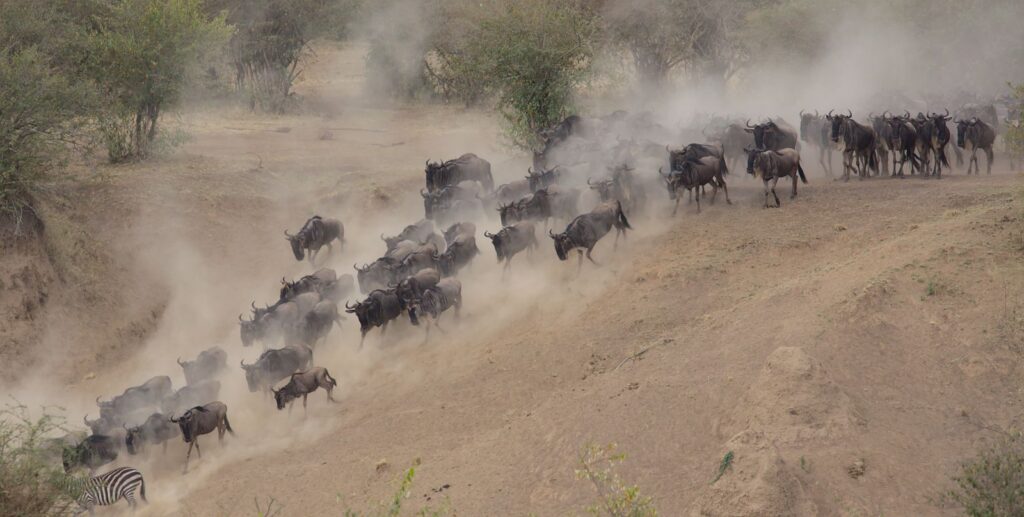


Migration timing shifts every year with the rains. We design flexible Serengeti circuits, choose camps for access rather than brochure promises, and keep your game-drive days focused on where the herds and predators are concentrating right now.
December–March: Southern Serengeti and Ndutu plains — calving season, short-grass predation, and large herds on open flats.
April–May: Herds typically push north and west; landscapes are green and quieter. Good value if you accept possible rain.
June–July: Western corridor and Grumeti crossings can begin as animals push toward the Mara River.
July–October: Classic river-crossing drama along the northern Serengeti / Mara interface — peak demand, book early.
November: Herds start drifting south again; excellent photography light and slightly fewer vehicles than high season.
Ideal for wildlife enthusiasts, photographers, honeymooners who want one unforgettable bush week, and returning safari guests who have done the Big Five and now want the spectacle of mass movement. Families do well on private vehicles with softer camp choices; first-timers often combine migration days with Ngorongoro for a complete northern-circuit story.
Share your preferred month, group size, and lodge style. We propose a Serengeti-centred itinerary timed to the herds, with clear options for river-crossing windows or calving plains. After you approve the route, we confirm camps known for access, keep transfers efficient, and brief your guide on photography priorities and daily flexibility. From arrival in Arusha or Kilimanjaro Airport through every game drive, our team stays reachable if herds shift overnight.
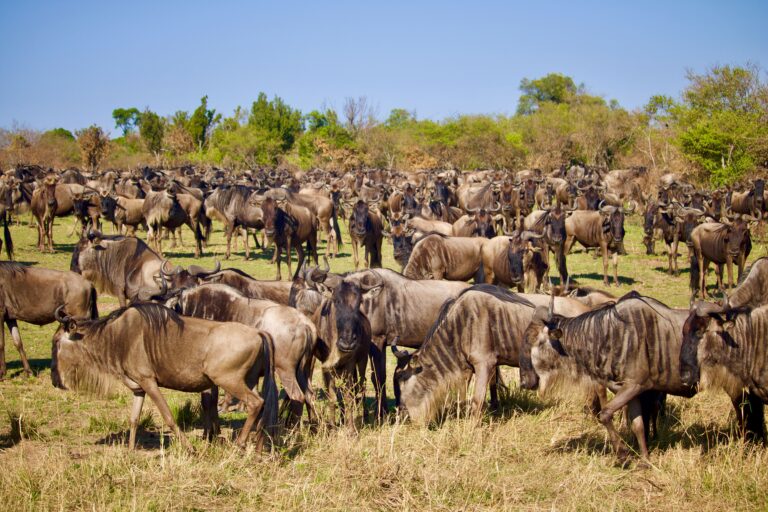


Most travellers aim for July–October in northern Serengeti for Mara River crossings, but exact weeks change with water levels and herd movement. We time camps and spare days around the latest field reports for your travel dates.
Yes. Calving season (roughly December–March) in southern Serengeti is spectacular in a different way — newborn wildebeest and intense predator action — without the same river-crossing crowds.
For a serious migration focus we usually recommend at least three to four Serengeti nights so you can reposition if herds move. Shorter stops work when paired with a carefully chosen central or northern base.
Absolutely — especially when we add Ngorongoro or Tarangire so you still cover classic Big Five habitats alongside the herds. We keep logistics simple and explain what to expect each day.
Yes. Private 4x4s are our standard for migration itineraries so you control pace at crossings, photography stops, and picnic spots.
Tell us your month and travel style — we will build a Serengeti Great Migration safari timed to where the animals will be.
Request a custom quote